
Sprouts vs Microgreens
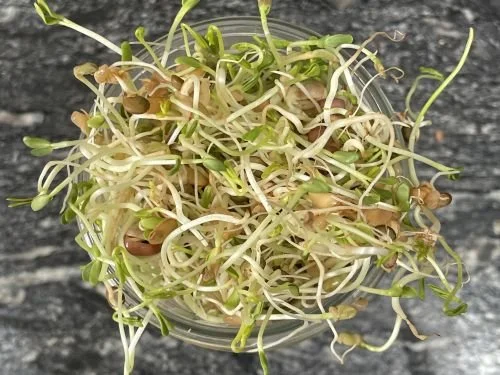
I have been growing spouts for many many years. I love them in a salad, on a sandwich or just to eat them as a snack right from the jar in the fridge. Lately 'microgreens' have been having a popular moment. They are similar to each other in that microgreens are the planted version of the seeds that are used to spout, I was curious about the nutritional value between them. I did some research and then asked AI to distill the vast about of info into a shorter readable friendly format - their synopsis is below with some of my own edits. (Once again, I am amazed and frightened by what AI can do - and it's in its infancy still - what will it evolve to...? My thoughts on this are for another newsletter!)
Sprouts vs. Microgreens
You have probably seen sprouts and microgreens at your local grocery store or farmers' market. While they look similar, these tiny greens are actually quite different in how they grow, how they taste, and what they offer your body.
What are Sprouts?
Sprouts are the very first stage of a plant's life. They are seeds that have cracked open and started to grow in water.
How they grow: Sprouts grow entirely in water without any soil or sunlight.
Time to harvest: They are ready very quickly, usually in just 3 to 5 days. Then they store in your fridge.
What you eat: You eat the whole thing—the seed, the stalk/stem and the root.
Texture and taste: They are crunchy, watery, and usually have a mild, nutty flavor. Alfalfa, broccoli and mung bean sprouts are the most common types.
What are Microgreens?
Microgreens are the next stage up. They are baby plants that have been given time to grow their first true leaves.
How they grow: Microgreens are planted in soil (or a special mat) and need plenty of sunlight.
Time to harvest: They take a bit longer, usually 7 to 21 days. and then it starts all over again with new seeds.
What you eat: You eat the stems and the leaves. You cut them off at the soil line, leaving the roots behind.
Texture and taste: They have a stronger, intense flavor.
Nutrition and Safety: How They Compare
Both options are packed with vitamins and antioxidants, making them much more nutrient-dense than full-grown vegetables. However, they have different strengths.
Nutritional Edge:
Microgreens generally contain a wider variety of nutrients and higher amounts of Vitamin C, Vitamin E, and beta-carotene because they absorb nutrients from the soil and energy from the sun.
Both are a good source of fiber, protein, vitamins, and minerals, spouts provide more active enzymes and easily digestible plant proteins.
The Verdict: Which Should You Choose?
Choose Sprouts if: You want an easy, inexpensive, fast, and crunchy texture to pile high on sandwiches, roll into spring rolls, or toss into veggie dishes (at the very end of cooking).
Choose Microgreens if: You have the space, the time and the expense of the necessary equipment to have more intense flavors, a more chic garnish for soups and open faced sandwiches.
I opt for spouting as it's so easy and takes up little space, is quick to start and to rinse daily, quite fun to watch the little tails emerge from the seeds and grow into tender stalks and best of all ready to eat in a short period of time.
Here are my step by step instructions how I grow my sprouts!